The Unwritten Rule Is Not a Shared Agreement
A shared agreement turns a recurring assumption into a clear, fair decision, helping neighbors coordinate use of a common space without friction or guesswork.

The most common mistake with a shared agreement is treating an assumption as a decision everyone made. The cost is not just confusion: neighbors may stop using a place, or one person may quietly inherit a responsibility no one assigned. A shared agreement should make the group’s actual choice visible, not merely tidy up a routine.
That distinction matters. A chore list can say who sweeps the community room; an agreement can settle whether the room must be cleared after every gathering, who gets to set that expectation, and how people with different needs can take part.
Separate rules from decisions
Some disagreements look like practical snags but are really unresolved choices. One neighbor may want a garden plot reserved for individual use, while another expects the space to remain open for shared planting. No sign can settle that difference until the group decides what the space is for.
Start by naming the choice, not drafting a rule. Ask who is affected, what competing needs are in play, and who has authority to decide. If those questions have no agreed answer, the group has a decision-making problem, not a wording problem.
A useful agreement records a decision people can recognize and act on. It need not make everyone equally pleased; it should make the accepted arrangement clear, including how people can raise a concern if circumstances change.
Find the real disagreement
Describe the issue without assigning motives. “The room is not ready for the next booking” is more useful than “people are inconsiderate.” Then ask whether the problem concerns access, shared impact, responsibility, or authority.
Those categories point to different conversations. A conflict about who may reserve a room needs an access decision. A conflict about noise near a meeting may need a shared boundary. A dispute about who decides should not be disguised as a request for better signage.
Keep the scope narrow enough to discuss in one sitting. If the group is debating the purpose of a garden, do not also try to settle every detail of composting and watering.
Choose a fair process
Before a group settles an expectation, agree on a process that affected users can understand. A small group might discuss the options at a regular gathering; a larger one might collect comments through a shared document before deciding. The method matters less than making clear who can contribute, who makes the decision, and how the decision will be communicated.
Some choices call for broad agreement; others can be delegated to a caretaker or working group. Say which applies rather than letting silence stand in for consent. If people cannot attend a meeting, give them a reasonable way to review the proposal and respond.
When needs conflict, name the trade-off plainly. A room reserved for quiet use may be less available for noisy activities; an open garden may offer less certainty to someone tending a particular bed. The group can then decide which cost it is willing to accept.
Write the decision clearly
Once the group has decided, record the arrangement in ordinary language. Include what applies, who it applies to, and how someone can ask for a review. Avoid vague ideals such as “be respectful” unless the group also explains what that means in the setting.
For example, “The community room is for scheduled gatherings, and the booking coordinator confirms requests using the shared calendar” states a purpose and a process. If the group has not decided whether private events are allowed, that sentence should not pretend the question is settled.
Ask someone who missed the discussion to read the wording and explain what they understand. If their interpretation differs from the group’s decision, revise the text before posting it.
Check the agreement together
Use these checks to decide whether the proposed wording reflects a real group decision or merely a convenient draft:
- Check whether the issue affects more than one user; if it does, discuss the shared impact, and if it does not, handle it as an individual preference.
- Check whether the group has identified who may decide; if it has, state that process, and if it has not, settle the authority question before adopting a rule.
- Check whether affected users had a way to comment; if they did, record the decision, and if they did not, pause adoption and provide a way to respond.
- Check whether the wording describes an observable arrangement; if it does, post it where users need it, and if it does not, replace broad values with a specific decision.
- Check whether the arrangement excludes someone because of a schedule, ability, or access need; if it does, discuss an alternative, and if it does not, proceed with the agreed wording.
- Check whether a review route is named; if it is, share how to use it, and if it is not, add a contact or group process before treating the decision as settled.
Imagine a neighborhood group has a community room used for quiet meetings and occasional music rehearsals. At first, some members assume rehearsals are welcome while others consider the room quiet by default. The group lists the options, hears from both sets of users, and decides that rehearsals may be booked only when no quiet meeting is scheduled; it assigns the booking coordinator to update the shared calendar and records that members can request a review at the next regular gathering. The resulting answer is concrete: users check the calendar before planning either activity, and the group has a stated route for reconsidering the trade-off.
Keep duties distinct
A decision about how a space is used is not the same as assigning every closing task. If users disagree about who resets a room or handles a recurring chore, make that a separate conversation about responsibility. Combining it with access rules can leave both questions muddy.
Say you have a shared kitchen where some users want a quiet-use period while others need it for group meals. The group can first agree on when each use is allowed, then separately decide how users report a problem with the schedule. The observable result is a clear access arrangement, without quietly making the person who posts the calendar responsible for enforcing every part of it.
Keep the agreement focused on the decision the group actually made. Routine instructions can sit beside it, but they should not be mistaken for proof that everyone agreed to the underlying policy.
Review when conditions change
Review an agreement when the resource, its users, or the original problem changes. A room that gains a second entrance may need a different access arrangement; a garden shared by new groups may need the original decision explained again.
Ask whether the arrangement still addresses the stated need, whether users can follow it, and whether its costs have fallen unevenly on one group. If the decision still fits, leave it alone. A review is a chance to check the arrangement, not an invitation to reopen every settled question by habit.
When a change is needed, record the new decision and remove outdated copies. Keeping two versions on the noticeboard is an unusually efficient way to create a third interpretation.
Questions about agreements?
Does every shared space need a written agreement?
No. Write one when people face a recurring disagreement about access, shared impact, or who gets to decide. If the arrangement is already understood and causes no continuing problem, formal wording may add more ceremony than clarity.
What if the group cannot agree?
Identify the competing needs and the decision process before trying to polish the wording. If the group lacks an agreed way to decide, address that first or seek help from a neutral facilitator.
Who should approve a shared agreement?
That depends on the group’s existing arrangements and who is affected. State whether the decision belongs to all users, a designated committee, or a delegated role; do not let an informal draft acquire authority by being printed.
How can the group avoid a punitive tone?
Describe the arrangement, the reason for it, and the route for questions without naming past offenders. Neutral wording makes it easier to discuss whether the agreement works rather than who inspired it.
Keep the decision visible
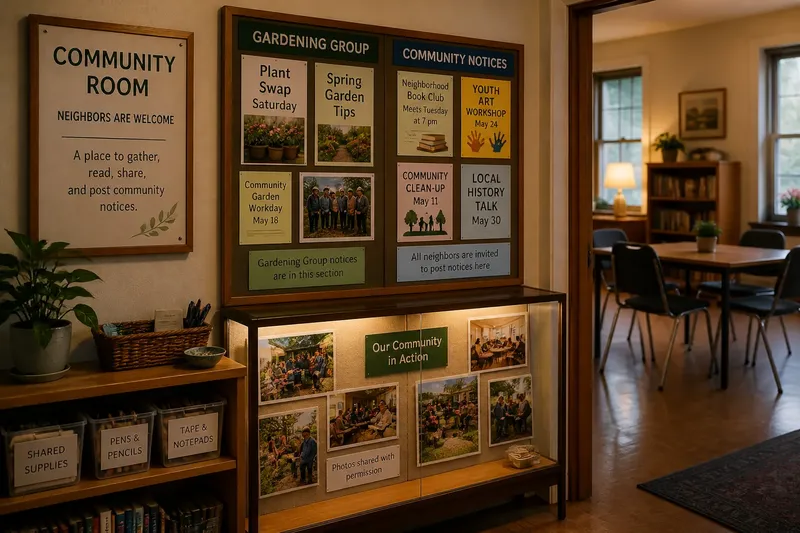
Place the agreement where people encounter the decision: on a room’s noticeboard, in the community garden’s shared notes, or in the calendar used to coordinate access. A document buried in an old message thread is available in the same way a key lost under a floorboard is available.
For a shared agreement, the useful search phrase is not a particular sentence but the decision behind it: what the group chose, who the choice affects, and how it can be revisited. Keep those points together, and the next disagreement can begin with the actual arrangement rather than a neighbor’s guess about what everyone supposedly meant.