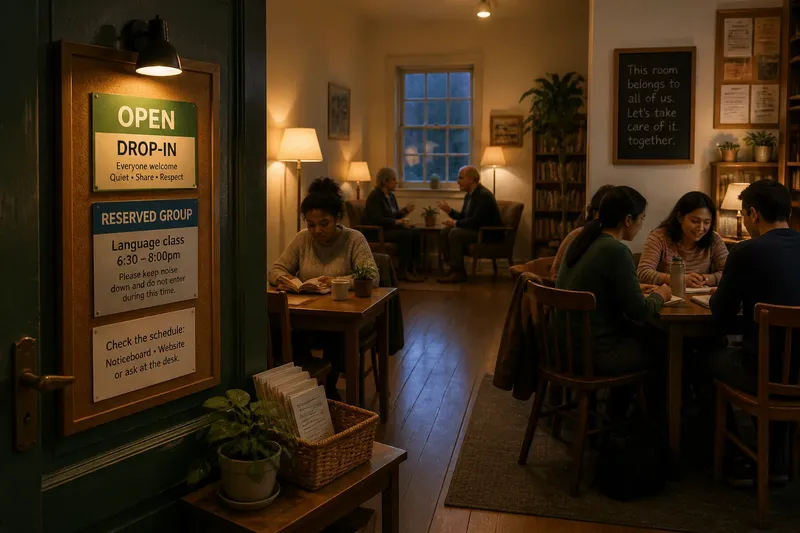
How to Set a Shared Room’s Purpose Without Making It Feel Owned
Set a shared room’s purpose with clear signs, inclusive displays, and flexible furnishings so neighbors can recognize that they belong there.
The common mistake in setting a shared room’s purpose is letting the most visible group define it by default. A wall covered in one club’s notices or a permanent row of meeting chairs can make other neighbors feel like guests, even when the room is technically open to them.
A shared room’s purpose is easiest to understand when its signs, displays, and everyday care show who belongs—not just what activity happens there. That means paying attention to the room’s public identity, rather than treating its calendar or furniture arrangement as the whole issue.
Read the room’s signals
Look at what a visitor sees before anyone explains the space. Club logos on every wall, labeled cabinets, personal decorations, and a prominent table of one group’s materials can suggest that the room has an owner. A general welcome sign cannot undo those signals by itself.
Ask people who use the room occasionally, and people who have stopped coming, what they think it is for. Invite specific answers: what they noticed on entering, what they felt comfortable touching, and what made the space seem intended for someone else.
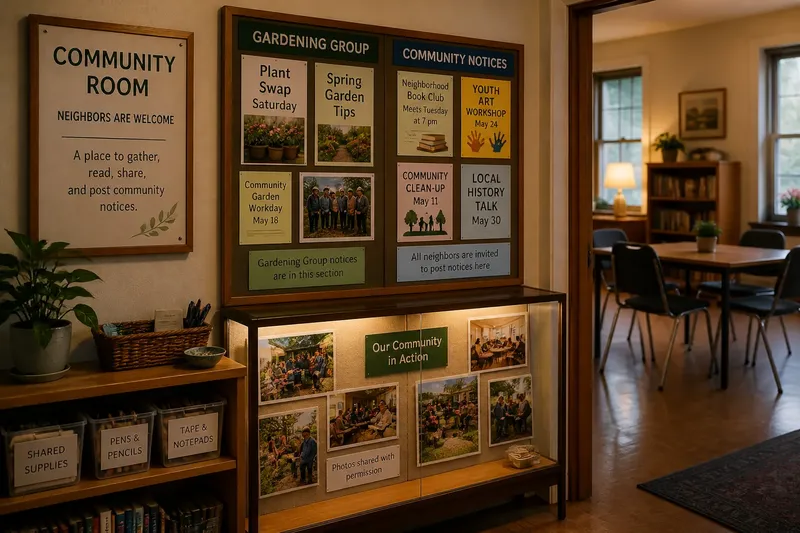
Say you find a noticeboard filled with one neighborhood association’s flyers and no open space for other announcements. If the group moves its flyers to one clearly marked section and leaves another section for community notices, a newcomer can see that the wall is shared without needing to ask permission.
Describe belonging clearly
Write a short statement about who the room welcomes and what kinds of community life it supports. “A place for neighbors to gather and share local activities” is more useful than “community space,” which names a category but offers little guidance about belonging.
Read the wording from the viewpoint of someone arriving without a group, project, or invitation. If that person could reasonably wonder whether they are allowed to sit, talk, or use a shared display, revise the statement until its welcome is plain.
Place the statement where people naturally enter or pause. Keep it specific enough to guide choices, but do not turn it into a claim that one group represents everyone who uses the room.
Share visible ownership
Signs, displays, and stored belongings shape the room’s identity. Give community notices a defined place, identify shared supplies in ordinary language, and remove expired material as part of routine care. Avoid labeling an entire cabinet or wall for one group unless that arrangement has been agreed to by the people responsible for the space.
Use names and images with care. A display that includes several kinds of neighborhood activity can suggest a broader invitation; a display featuring only one club’s members can imply that others are visitors. Ask contributors before putting up personal photos, and make it easy to replace material that no longer reflects the community.
Say a residents’ group has taken over a display case with its meeting notices and photographs. If it moves those materials to a shared section, invites other groups to contribute, and labels the case as a community display, the expected visible result is a wall that communicates shared stewardship rather than exclusive claim.
What signals say “you belong”?
What should a welcome sign say?
Name who is welcome and describe the room in everyday terms, such as “Neighbors are welcome to gather, read, and share community notices.” If visitors still have to guess what is theirs to use, add a simple note identifying shared seating or supplies.
How can one group avoid seeming like the owner?
Keep the group’s materials in an agreed area and avoid making its identity the room’s dominant visual feature. If its notices crowd out other information, move some to a shared display or ask the responsible organization to agree on a fair arrangement.
How should personal items be displayed?
Ask permission before displaying identifiable photos or belongings, and explain how long they will remain. If contributors cannot agree on a shared display, use a rotating space or keep personal items in a separate area rather than presenting them as the room’s permanent identity.
What if visitors still feel out of place?
Ask what they saw or encountered, without assuming that a sign or a single conversation explains the problem. If the concern points to a specific barrier, such as unclear labels or a display dominated by one group, change that feature and ask whether the room now reads differently.
Keep shared identity current
Make someone responsible for ordinary upkeep, such as clearing outdated flyers, keeping shared supplies identifiable, and checking that the welcome sign remains visible. The task should be small enough to fit into regular room care, not a ceremonial review that happens only after someone complains.
- If the entrance sign names only a private group, then replace it with wording that identifies the room as shared; if the sign already names the community, then keep it and check that it remains visible.
- If one organization occupies the whole noticeboard, then move its material to an agreed section; if other groups already have clear space, then leave the layout in place.
- If shared supplies have personal or unexplained labels, then clarify which items belong to everyone; if ownership is already clear, then preserve the labels.
- If photographs or personal items appear without contributors’ permission, then ask before retaining them; if permission is confirmed, then keep them in the agreed display area.
- If a visitor cannot tell which seating or materials are shared, then add a plain label; if the boundaries are already obvious, then avoid adding unnecessary signs.
- If notices are outdated or cover other community information, then remove or relocate them; if the display is current and balanced, then leave it unchanged.
Imagine a shared room where a gardening group’s posters fill the entrance wall, its members’ photos occupy the display case, and the sign says only “Garden Club.” The stewardship group decides to keep the posters together in one labeled section, invite other neighborhood groups to use a second section, replace the entrance sign with “Community room—neighbors are welcome,” and ask photo contributors before retaining their pictures. The resulting arrangement still acknowledges the gardeners, but a visitor can also see where other community notices belong and understand that the room is not reserved for one organization.
For a shared room’s purpose to remain welcoming, its visible details need to show more than who used it last. Check whether a newcomer can identify the shared areas, find a place in the room’s public story, and understand how to contribute. If one group’s identity has crowded out that welcome, change the display or wording before asking people to feel included by declaration alone.