Open Hours or Booked Slots? Choosing a Room-Sharing Rhythm
Open hours or booked slots? Match a shared room’s schedule to the activities it hosts, balancing dependable access with room for spontaneous use.

The common mistake in choosing open hours or booked slots is treating the schedule as a minor administrative detail. A poor fit costs neighbours time: someone arrives to find a meeting underway, or a room sits empty because every use needs advance coordination. The right room-sharing rhythm depends on what people do there and how much certainty those activities require.
Start with the activity
Open access suits uses that can begin and end without much preparation: reading, informal conversation, or a drop-in craft table. People can make use of the room when it happens to fit their day, rather than coordinating calendars first.
Booked slots suit activities that need a particular time, a known group, or a quiet stretch. A language class, confidential support meeting, or rehearsal may be difficult to interrupt or relocate once underway. A booking gives participants a dependable window and makes competing claims visible before anyone sets out.
List the room’s likely activities before choosing a system. The question is not whether people prefer freedom or order in general; it is whether a given use can tolerate an uncertain start, a shared table, or a brief interruption.
Read the room’s pressure points
Some rooms have natural pinch points. A narrow entrance, one accessible table, or a single area suitable for quiet work can make simultaneous uses awkward even when the room itself is large. Open access works best when arrivals can share the space without needing to negotiate every chair.
Notice what happens at transitions, too. If one group needs to clear materials before the next can set up, an exact slot boundary may create friction. A schedule with a buffer can help, but only if someone can manage the handoff and the room’s opening arrangements support it.
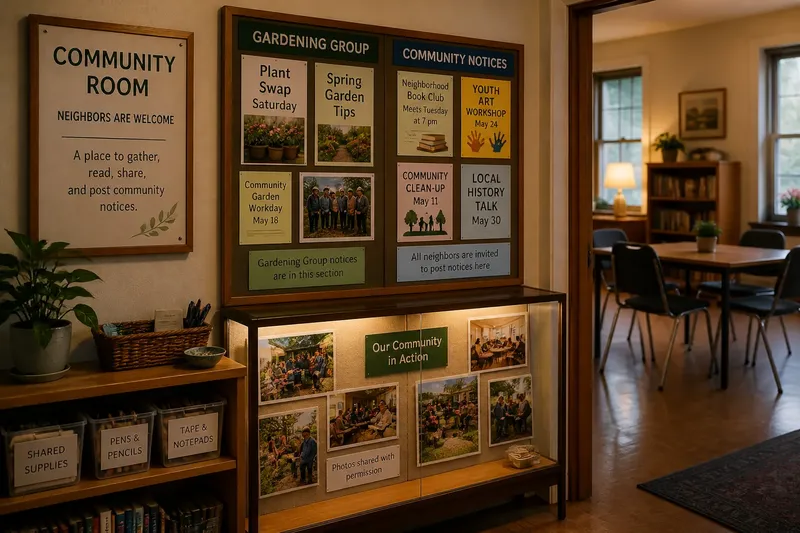
Simple signs can explain the room’s current status, but they cannot resolve a schedule people do not understand. Make the actual access method visible at the entrance and in the place where neighbours normally check community notices.
Choose a workable rhythm
Open hours and booked slots are not the only options. A mixed arrangement can reserve dependable periods for activities that need them, while leaving other periods open for drop-in use. That can preserve spontaneity without asking a class or support group to compete for the room each time.
For a mixed schedule to work, people need to know which mode applies at a particular time. Use plain labels such as “open drop-in” and “reserved group,” rather than a calendar key that requires interpretation. If the room’s booking calendar is online, provide a non-digital way to check it as well.
- Use open hours when people can arrive independently and share the room without disrupting one another.
- Use booked slots when a group needs a dependable time, privacy, or room to arrange materials.
- Use a mixed rhythm when the room hosts both casual visits and activities that cannot work on arrival alone.
- Leave transition space when groups need time to clear or reset the room between uses.
Say a neighbourhood room hosts casual reading and a weekly language class. Imagine the reading period is left open, while the class has a clearly marked recurring reservation and a short handoff window before it begins. Readers can drop in during the open period; class participants can plan around a known start without treating the room as unavailable all week.
Keep access legible
A schedule is only useful if neighbours can tell what it means. Put the current hours, booking contact, and method for checking reservations in one obvious place. If bookings can be made only by contacting a particular person, explain what happens when that person is unavailable.
Consider who can use each system. Online booking may be convenient for some neighbours and a barrier for others; open hours may be flexible for people with free time but unreliable for those who travel or arrange care around a visit. Offer a practical alternative where the chosen method excludes people who would otherwise use the room.
Keep the rules about the schedule narrow and observable. State when a booking begins, how an unused reservation is handled, and whether people may enter during another group’s slot. For building access, safety requirements, and local rules, follow the applicable instructions and ask a qualified professional where needed.
When should a room be booked?
Does every group need a reservation?
No. A reservation is useful when timing, privacy, or setup matters; it adds friction to casual uses that can share the room comfortably. Let the activity, rather than a preference for formal calendars, determine whether a slot is needed.
Can open hours still include scheduled activities?
Yes, if the schedule makes the exception clear and the open period does not promise access at the same time. Mark reserved periods where people check the room’s hours, not only on a calendar used by organizers.
What if two groups want the same time?
Use a visible booking method and a consistent way to resolve conflicts, such as asking groups to choose another available period. Avoid relying on private messages or unwritten assumptions that newcomers cannot see.
How can neighbours tell if the schedule is working?
Pay attention to repeated missed visits, clashes at handoffs, and periods that remain unused despite requests for access. Those signs can point to a mismatch between the rhythm and the activities, without requiring a complicated review process.
Adjust without overhauling
Shared rooms change as groups form, pause, or shift their routines. Review the schedule when a recurring conflict appears or when neighbours repeatedly ask for a different kind of access. A small change to one period may solve the problem without turning the entire calendar into a negotiation.
Keep the reason for each reserved period apparent, and remove reservations that no longer serve an active use. Open hours or booked slots are easier to live with when the schedule reflects what neighbours actually need from the room, rather than preserving empty blocks out of habit.
Before changing the room-sharing rhythm, tell regular users what is changing and where the updated schedule will appear. That modest notice can prevent a useful adjustment from becoming an avoidable surprise.